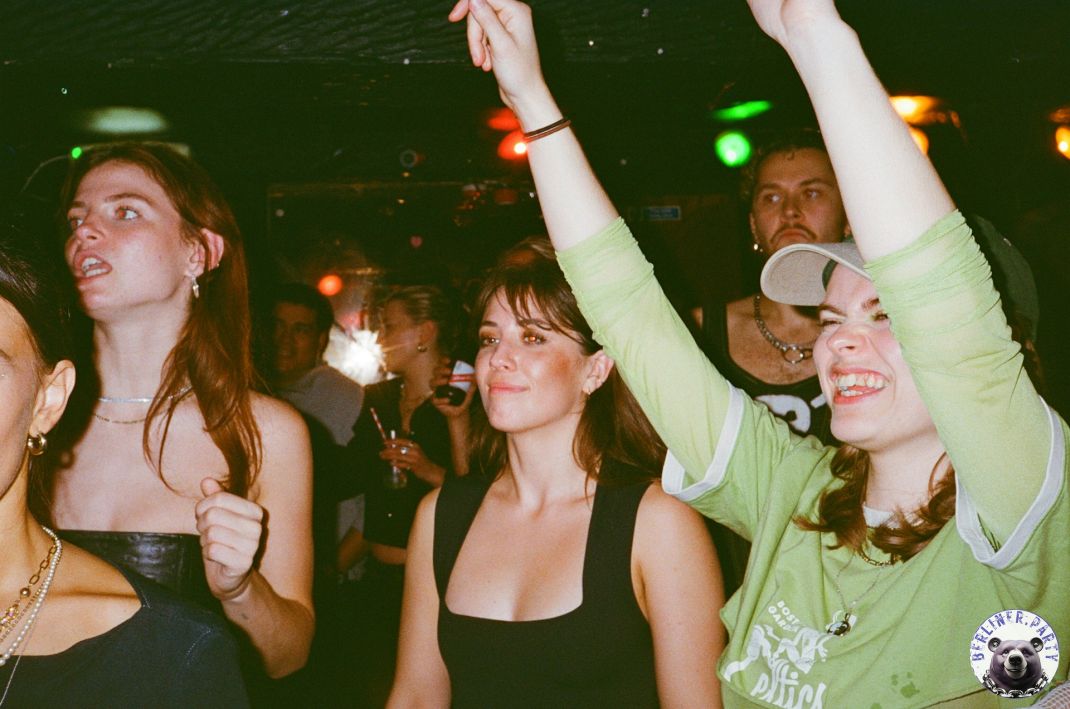
She is 22, has been in Berlin a year, and moved here for exactly this. Friday night she does the maths: 25€ door, 5€ cloakroom, three drinks, night bus home. Sixty euros before anything has happened. She stays in.
That is the story we hear most often right now, and it is the real problem facing Berlin club culture.
What a night actually costs
The 12€ door is history. 20 to 30€ is standard, kinky and fetish nights often more, plus cloakroom, bar, and the way home. Going out once a week now means budgeting a three-figure sum every month. For anyone on a student job, an internship or minimum wage, that stopped being an expense and became a decision against something else.
And increasingly the decision goes the other way. Arrive later, leave earlier, once a month instead of every week, drink at home first, house party instead of club. Not because the interest is gone — because the numbers do not work.
The clubs are not the villains
The Clubcommission's Clubkultur Berlin 2026 study explains why the door keeps climbing:
- 39% of Berlin clubs closed 2025 at a loss. In 2017 it was 21%.
- 59% of club revenue now comes from admission — in 2017 that was 21%. Bar and gastro used to carry the night.
- 73% sell less alcohol than before.
- 47% raised ticket prices, 67% raised drink prices.
- 92% agree themselves that admission prices have become a barrier for certain groups.
The bar used to subsidise the night. Now the door has to carry the venue — and the door is exactly where the least-paid part of the crowd gets filtered out. In the kinky end it bites harder: awareness teams, play areas, cloakrooms, fewer guests per square metre, more staff. A safer space costs more to run than a room with a bar in it.
Why this hits the scene itself
A dancefloor does not renew itself. Somebody has to walk through the door for the first time, get lost, catch the wrong room, come back. People who never start at 22 do not start at 30.
What is left is a crowd that ages along with the scene and pays more every year for the same night. Full floors, empty tills, no new arrivals — that is how a club city quietly stops being one. Quietly, because nobody you would miss is absent. A few people simply never turn up in the first place.
Two who are doing something about it
Two Berlin addresses have started fixing this at the price — independently of each other, which makes it more interesting than a campaign.
Kater has sold a 15€ Next-Gen Ticket since July to guests aged 18 to 24, in presale on Resident Advisor or at the door while available. ID required, normal door policy unchanged.
Their announcement is unusually direct about the reasoning. Prices are going up and they want the room to stay reachable anyway, above all for the people who are supposed to shape club culture next. There has been plenty of gatekeeping and complaining about the younger generation, they write, and not much support for anyone trying to find a way in — so they would rather take an active role in welcoming them into the community as equals. And the cheaper ticket is aimed at what it buys access to: nights with Mira, Kenny Larkin, Sandy Rivera, Cassy, DJ Pierre, Britta Arnold, Mark Farina or The Hacker, seen first-hand rather than heard about.
UNDR does the same thing with a different line: 28 & UNDR puts the ticket at 20€ for their parties at INSOMNIA and 15€ at CAGE at AMT if you are 28 or younger, plus a 10€ tier at CAGE that stays open to everybody. Their reasoning is in their blog post.
We are happy to see development in this space. Neither is a solution: an age line is a blunt instrument, 29 does not mean rich and 24 does not mean broke, and the clubs are under exactly the same cost pressure afterwards. But it is the first lever in a long time that somebody can pull alone, without waiting for funding or policy.
We would like to see more of it. The door is where Berlin decides who is still dancing in ten years.

About Berlin's own Nightlife Ambassador: With speaker ears tuned to the city's heartbeat and a chain symbolizing Berlin's rich techno heritage, Benny is more than just a mascot; he's a symbol of the city's pulsating nightlife. His encyclopedic knowledge of Berlin's clubs, DJs, and legendary parties makes him the ultimate guide for your night out in the city. From the most iconic clubs to hidden gems, Benny's insights ensure that you party like a true Berliner, every time. So, get ready to experience Berlin's nightlife through the eyes of its most vibrant and beloved bear!